Plate Load Test: Key Insights and Practical Tips
Why Proper Site Preparation Matters?
Proper site preparation is essential before conducting a plate load test. Remove all loose debris and ensure the ground is level to achieve reliable results. The test plate must rest securely on undisturbed soil at the intended depth of the civil foundation. Disturbed or loose soil can produce inaccurate results, potentially leading to costly errors in design or construction.
Getting Your Equipment Ready
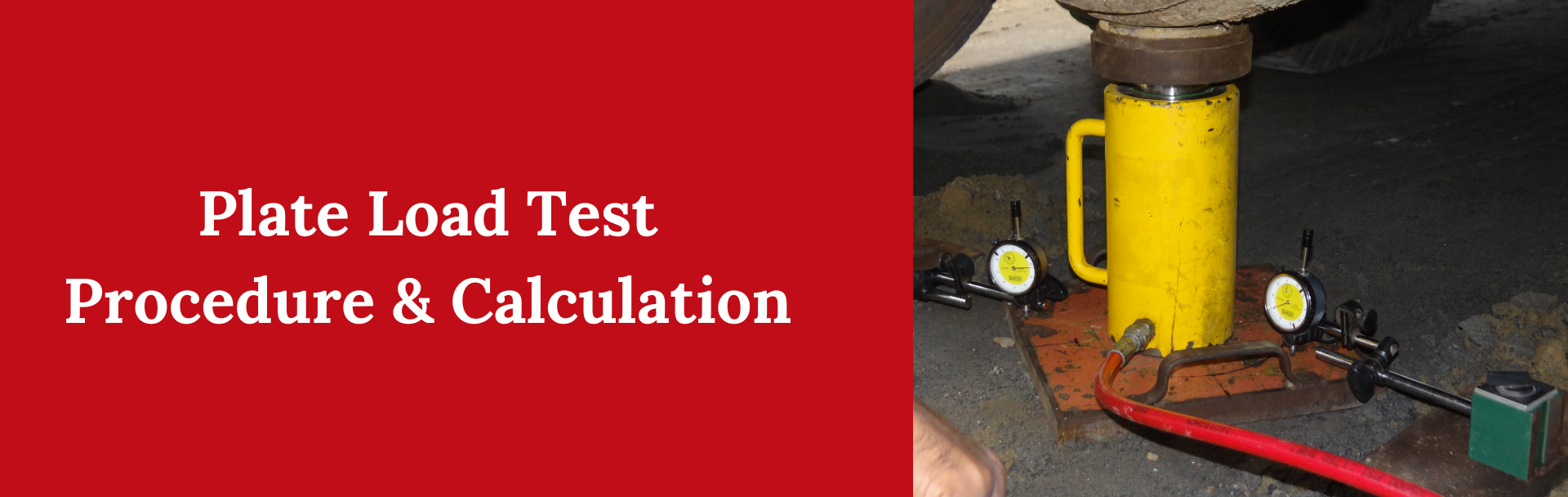
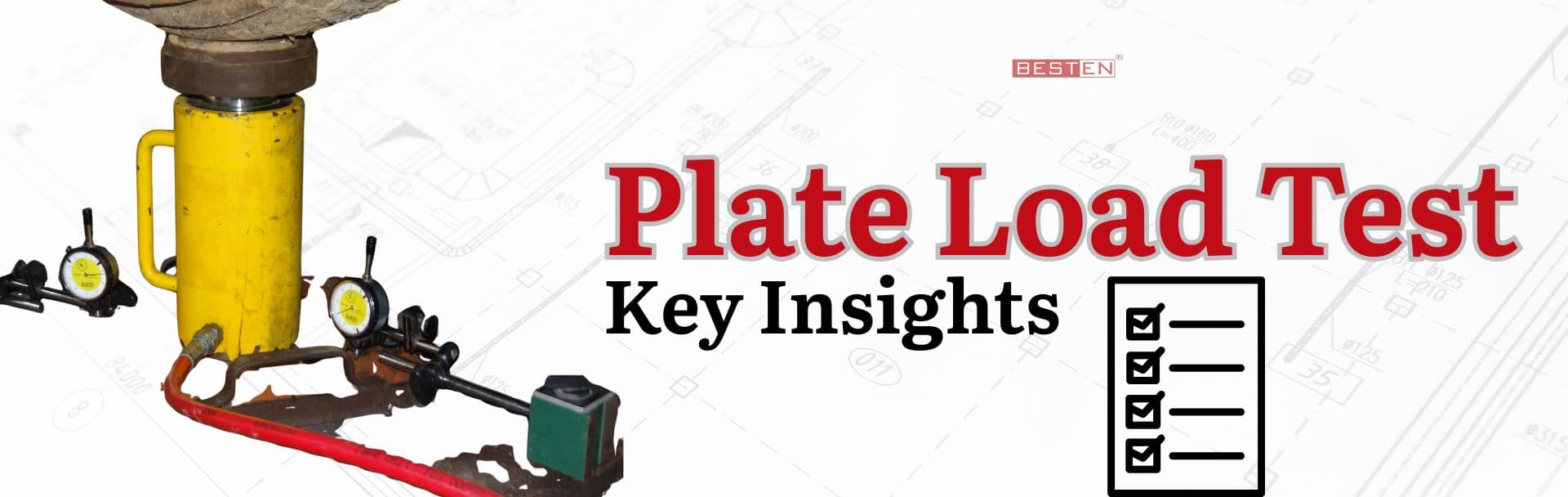
Equipment preparation is equally important. Calibrate hydraulic jacks, pressure gauges, and dial gauges to ensure accurate measurements. Position at least three dial gauges around the plate to detect any uneven settlement or tilting early, which helps prevent misleading data.
Common Mistakes—and How to Avoid Them
There are a few pitfalls to watch out for during the test:
- If the jack isn’t lined up correctly, it can push unevenly, throwing off results.
- An inadequate reaction setup may deform under pressure, compromising settlement measurements.
- Applying loads too rapidly, particularly in clay soils, does not allow sufficient time for soil adjustment, resulting in unreliable data.
- Changes in weather and groundwater can also affect test equipment and soil behaviour.
Making Sense of the Data
When reading the load versus settlement curve, it’s important to interpret it carefully. For clay soils, engineers usually consider the ultimate bearing capacity at a settlement that’s about 20% of the plate’s width. For sandy or granular soils, that figure is closer to 10-15%. Also, remember that results can differ for larger foundations because the soil behaves differently over bigger areas. In clays, long-term settlement can happen after the test, so estimates may need adjusting.
How Plate Load Tests Fit with Other Methods
Tests like the Standard Penetration Test (SPT) and Cone Penetration Test (CPT) give continuous profiles of soil layers but don’t show how soil reacts under heavy loads. That’s where plate load tests come in—they offer a real-world check of soil strength and settlement under actual conditions.
When Should You Insist on a Plate Load Test?
This test is especially useful when:
- You’re designing large or sensitive civil foundations where settlement control is critical.
- Soil conditions are mixed or uncertain and you need site-specific data.
- Differential settlement could damage your structure.
- You want to confirm your bearing capacity estimates before construction.
Conclusion
Although the plate load test has limitations, it offers direct insight into soil behaviour under load, which is valuable for informed and safe design decisions. When properly executed and combined with other soil investigations, it enables engineers to design reliable civil foundations and maintain project budgets.