High Side vs Low Side in MEP Systems
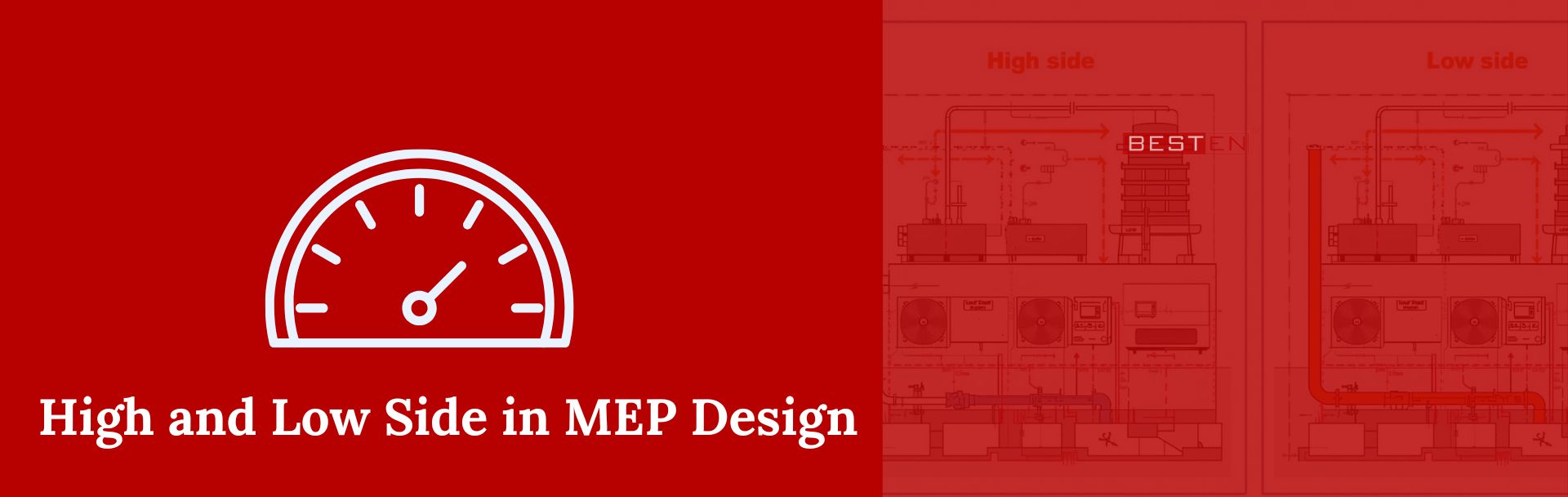
In the world of MEP Systems design, we use the terms High Side and Low Side to differentiate how pressure moves through a building. Typically, these terms are used for HVAC, gas lines, or steam piping. Every system is essentially a balance between High Side and Low Side. Moreover, this classification dictates the materials, safety elements in design and operating efficiency.
High Side
The High Side is the high-energy portion of the system. It exists where pressure is at its peak, usually immediately after a piece of equipment has “pushed” the fluid or gas.
Common “Pushers”:
- Pumps and Compressors
- Boilers and Pressure Vessels
Technical DNA:
- Elevated Pressure & Density: The fluid is packed tightly and moving with force.
- Heat Generation: In systems like AC, compression generates substantial heat.
- Structural Demand: This side defines your MAWP (Maximum Allowable Working Pressure). It’s why we use thicker pipe schedules, higher-rated flanges, and heavy-duty valves.
Low Side – The Distribution Part
The Low Side begins once the fluid passes through a regulator or expansion device. This is the “working” side where the pressure is tamed for end use.
The Transition Points:
- Pressure-Reducing Valves (PRV)
- Expansion Valves
- Orifice Plates or Control Valves
Technical DNA:
- Lower Stress: Because the pressure is lower, the structural requirements for pipes are usually less intense.
- Volume Shifts: In gases, as pressure drops, volume increases. This means you often need larger pipes on the low side to move the same amount of mass without causing friction.
- Sensitivity: This side is highly sensitive to “pressure drop” (friction). If the pipes are too small, the system won’t deliver enough flow to the end-user.
How it Works Throughout Different Disciplines
1. HVAC & Refrigeration (The Cooling Cycle)
In a standard AC unit, the High Side runs from the compressor to the expansion valve (hot, high-pressure liquid). The Low Side runs from the expansion valve back to the compressor (cool, low-pressure gas).
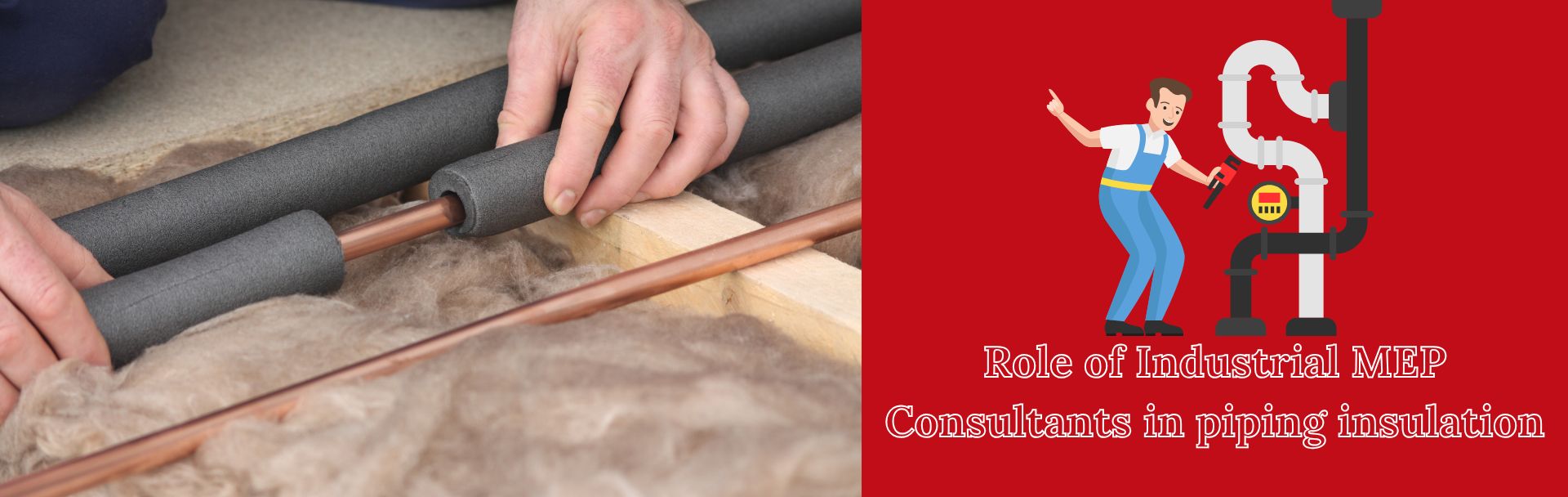
- Design Focus: The high side must handle heat; the low side must be insulated to prevent “sweating” and energy loss.
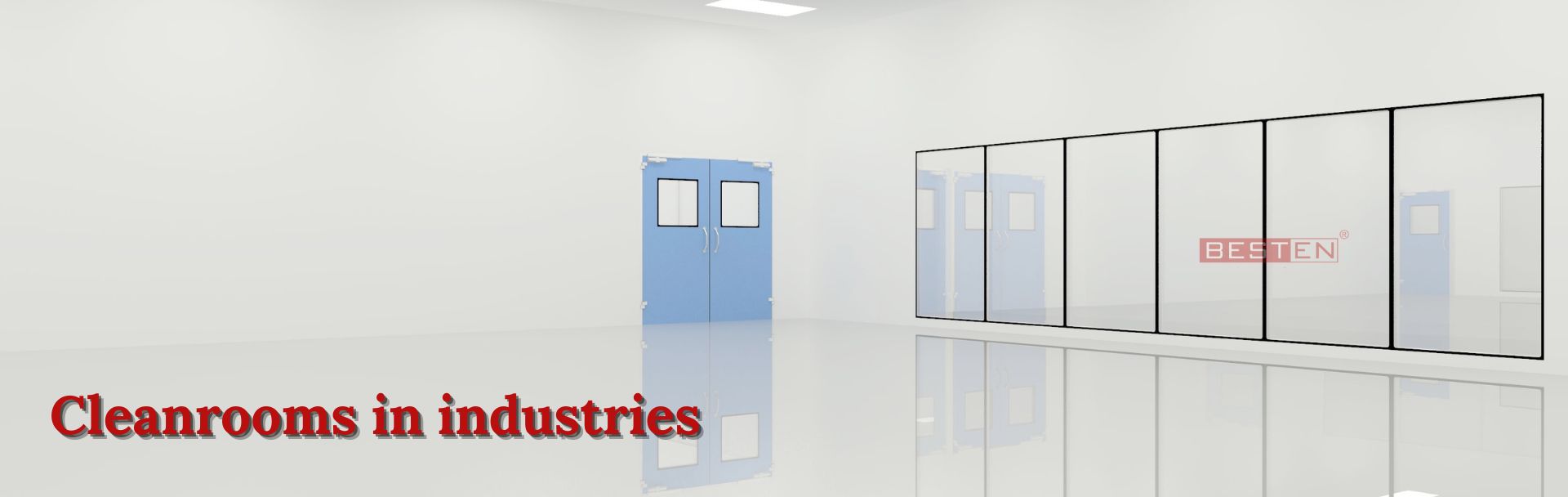
2. Air Pressure Zoning (Cleanrooms & Labs)
We also use “High” and “Low” to describe room pressure:
- Positive Pressure (High): Pushing air out to keep contaminants from entering (e.g., an operating room).
- Negative Pressure (Low): Pulling air in to keep smells or toxins from escaping (e.g., a commercial kitchen or lab).
3. Water & Plumbing
In high-rise buildings, the High Side is the main riser pushed by booster pumps. We then use PRVs to create Low Side zones for each floor so that the water doesn’t come out of the faucet with enough force to damage the fixtures.
4. Gas & Steam Distribution
- High Side: Often uses smaller, high-strength steel pipes to efficiently move gas over long distances.
- Low Side: Transitions to larger diameters near the appliances to deliver a steady, “soft” flame or flow.
Transition Points: The “Danger Zones”
The most critical engineering happens at the transition. Components like Relief Valves and Regulators are the gatekeepers. If a regulator fails, the High Side pressure can “overrun” the Low Side, leading to pipe bursts, equipment failure, or safety hazards.
Modern Design Strategy
Today, software helps make an informed decision.
- Hydraulic Modelling: To predict exactly where the pressure will drop.
- BIM Coordination helps ensure that thick-walled, high-pressure pipes have the required clearance.
- Scalability: Designing the High Side with enough “headroom” to add more Low Side equipment later.
Conclusion
Understanding High Side vs. Low Side is about control. It’s the difference between a system that runs quietly and efficiently for 20 years and one that suffers from leaks, noise, and constant maintenance. Furthermore, it is essential for MEP Systems design.
What is the main difference between high side and low side in HVAC?
In HVAC systems, the high side (discharge side) handles high-pressure, high-temperature refrigerant from the compressor to the condenser. Moreover, the low side (suction side) handles low-pressure, cool refrigerant from the evaporator back to the compressor.
Why are low-side pipes often larger than high-side pipes?
In gas or steam systems, reducing pressure causes the fluid to expand. To maintain a steady flow rate without excessive friction or noise, MEP consultants design a larger pipe diameter on the low side to accommodate this expansion.
What happens if a High Side/Low Side transition fails?
If a pressure-reducing device (such as a PRV) fails, the low-side components—which are rated for lower pressure—may be exposed to stresses beyond their design limits. This can result in “water hammer,” seal failure, or catastrophic pipe bursts.
Does high-side pressure affect energy efficiency?
Yes. If the high-side pressure is set unnecessarily high (e.g., in a pump or compressor), the system consumes more energy to overcome that resistance. So, modern MEP systems design seeks to keep the high side only as high as necessary to meet the lowest demand.